Porcelain Surfaces: The High-Performance Material Redefining Modern Kitchen Design
June 4, 2026
7 min read
7 min read
A shift is underway in kitchen and bath design—one surface at a time. Designers and homeowners are moving beyond the expected, seeking materials that balance refined aesthetics with real-world performance.
Modern thin porcelain countertops have become a defining response to that demand. With Caesarstone porcelain surfaces, design flexibility meets everyday durability—engineered for the demands of contemporary living while maintaining an elevated, architectural look.
Engineered for the Demands of Real Life
Porcelain surfaces aren’t simply attractive — they’re purpose-built. Unlike natural stone, which requires ongoing maintenance and can be vulnerable to staining and moisture, porcelain is an engineered material designed to meet the rigorous demands of residential and commercial environments alike. Its performance characteristics are consistent, predictable, and exceptional—delivering confidence across every stage of design and installation.
At the core of porcelain’s appeal is its non-porous composition. This means liquids, bacteria, and contaminants cannot penetrate the surface — a critical advantage in environments like kitchens and bathrooms where hygiene is paramount. There are no microscopic entry points for spills, oils, or pathogens to take hold.
A Material That Performs Across Every Application
What distinguishes porcelain surfaces from many alternatives is their versatility. Whether specified for a residential kitchen, a high-traffic commercial environment, a spa-inspired bathroom, or an outdoor installation, porcelain delivers consistent, long-term performance. This cross-application capability makes it one of the most flexible materials in a designer’s specification toolkit — reducing the complexity of sourcing multiple materials for a single project.
Heat, Scratch, and Stain Resistance — Built In
The performance credentials of porcelain surfaces are difficult to match. Key among them:
These properties aren’t marketed extras — they’re intrinsic to how porcelain is manufactured. No coatings. No treatments. No trade-offs.
Zero Sealing, Zero Compromise
One of the most common concerns with natural stone surfaces is maintenance, as materials like marble and granite require regular sealing, Porcelain requires none of this. Its non-porous structure eliminates the need for sealing entirely — now, and for the life of the surface. For clients seeking low-maintenance luxury, this is a decisive advantage.
A Slim Profile with a Sophisticated Impact
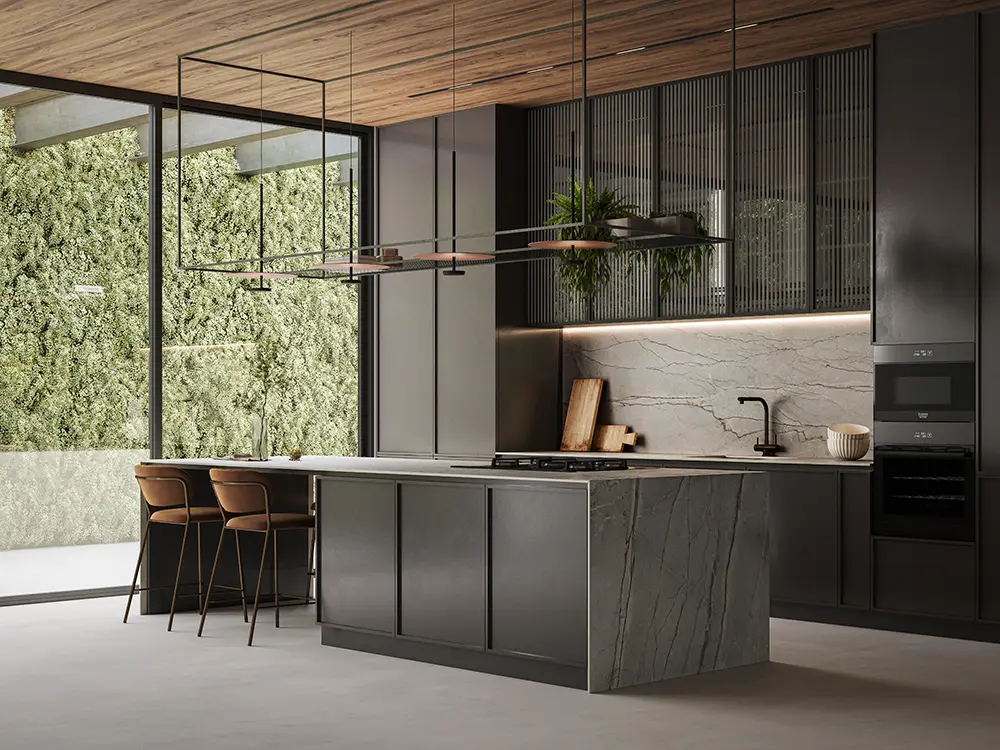
Thin porcelain countertops represent the architectural edge of porcelain surface design. Their reduced thickness — typically a fraction of traditional countertop depths — creates a visual lightness that reads as inherently sophisticated. In minimalist and contemporary kitchens, this slim profile enhances clean lines and reinforces a sense of precision.
Far from being a structural concession, the thin format is a design statement. It signals intentionality. It speaks to a designer’s understanding that restraint, when executed well, is more powerful than excess.
Installation and Structural Benefits
Beyond aesthetics, thin porcelain countertops offer practical advantages during installation and construction:
For designers working on high-specification projects, these qualities expand what’s possible within a given budget and structural context.
The Material Language of Restraint
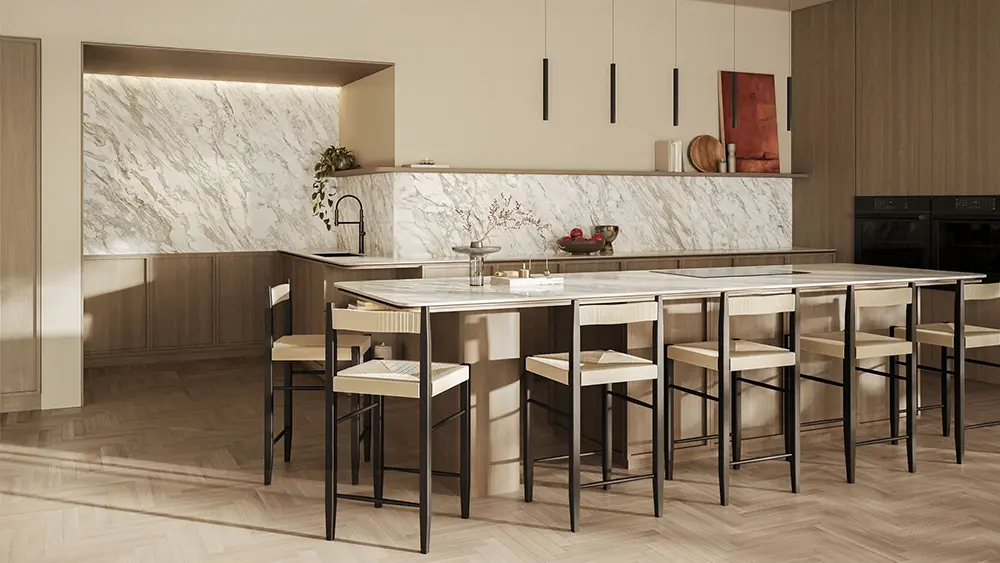
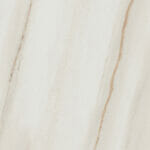
The principles of minimalist design — clean lines, balanced tones, uncluttered surfaces — find their ideal material expression in porcelain. Where other surfaces impose visual expression through veining, variation, or texture, porcelain surfaces can be specified to complement and recede, allowing architecture and spatial composition to lead.
Soft neutrals, warm whites, and cement-inspired finishes create calm, cohesive environments where the surface supports the room rather than competing with it. For clients drawn to Japandi aesthetics, Scandinavian interiors, or contemporary European design, porcelain surfaces are a natural specification.
Contrast, Depth, and Drama
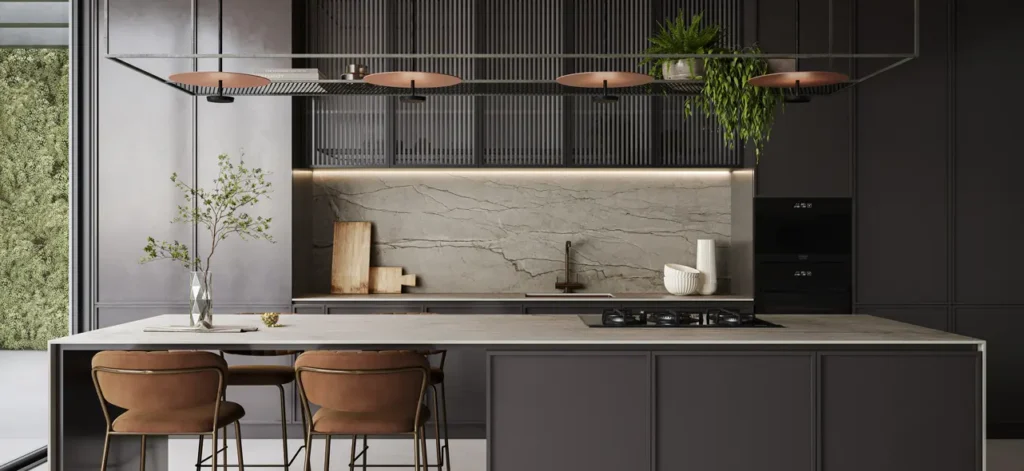
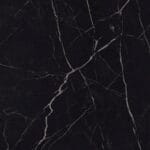
Minimalism doesn’t mean monotony. Darker tones in porcelain surfaces introduce depth and contrast, enabling a more dramatic design expression without sacrificing the material’s clean, modern sensibility. A matte black or deep charcoal porcelain countertop against handleless white cabinetry is a composition study — simple, considered, and genuinely striking.
The range of available finishes — from polished to honed, soft matte to textured stone looks — ensures that porcelain surfaces can integrate across an extraordinary breadth of design styles without compromise. The material adapts; the aesthetic ambition doesn’t have to.
A Premium Offering for Design-Forward Clients
For designers, the specification conversation is also a value conversation. When you present porcelain surfaces to a client, you’re presenting a material that delivers on every dimension they care about: beauty, durability, hygiene, and ease of living. That’s a compelling package — one that supports premium positioning and justifies investment.
Thin porcelain countertops, in particular, signal design sophistication. They’re not the obvious choice. They’re the considered choice. And for clients who care about design, that distinction matters.
The Long-Term Performance Promise
One of the most overlooked dimensions of material specification is what happens five, ten, or fifteen years after installation. Porcelain surfaces age exceptionally well. Their resistance to staining, scratching, and heat means they maintain their appearance without the interventions that other materials require. For homeowners, this translates to a surface that looks as considered a decade from now as it did on installation day.
For designers, specifying materials that perform over time is a reputation asset. When clients return — or refer others — because their surfaces still look exceptional years later, that’s the material doing work for you.
Versatility That Maximizes Project Value
From kitchen islands to bathroom vanities, from feature walls to outdoor installations, porcelain surfaces deliver consistent performance across contexts. This versatility allows designers to create visual continuity throughout a project — using the same material family across multiple applications for a cohesive, considered result. It simplifies the specification process and strengthens the overall design narrative.
The Bottom Line on Porcelain Surfaces
Porcelain surfaces have arrived at an inflection point. They’re no longer an emerging alternative — they’re a benchmark. Their combination of aesthetic range, engineering performance, and maintenance simplicity makes them one of the most complete material solutions available in kitchen and bath design today.
Thin porcelain countertops, in particular, represent the leading edge of this material category: a refined, architectural solution that brings lightness, sophistication, and performance to modern spaces without compromise.
For designers and retailers looking to elevate their material offering — and deliver something that genuinely meets the demands of modern clients — porcelain surfaces from Caesarstone represent exactly that kind of specification.
Interested in specifying Caesarstone porcelain surfaces for your next project? Explore our full range of finishes and formats, or connect with our team to discuss your specification needs.
{{ subtitle }}
{{ i.desc }}
{{ subtitle }}
{{ subtitle }}